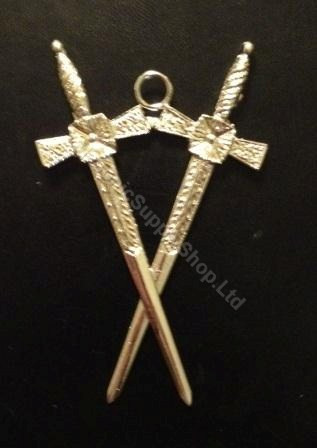
In a Canadian lodge, every officer wears a jewel showing his office, hung from a collar. Together they form some of the most recognisable Canadian regalia in the lodge room. Each jewel carries a symbol whose meaning is explained in the ritual. Here is a plain guide to what you'll see.
The principal officers
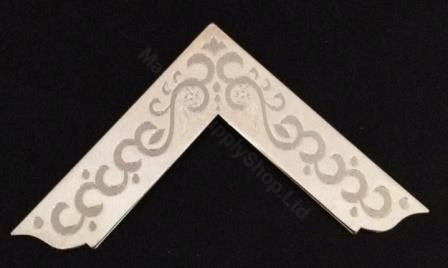
- Worshipful Master: the square. A reminder of virtue and right conduct.
- Senior Warden: the level. Associated with equality.
- Junior Warden: the plumb. Associated with uprightness.
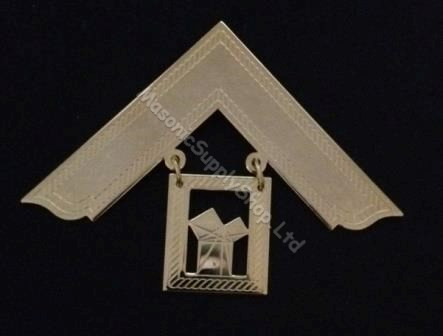
- Immediate Past Master: often a square with a geometric figure, or a design set by the Grand Lodge.
Other officers
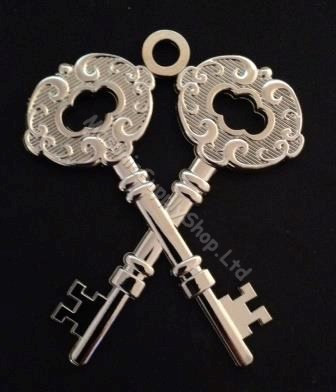
- Treasurer: crossed keys.
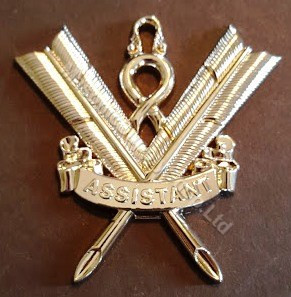
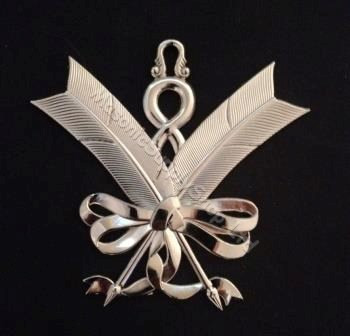
- Secretary: crossed pens (quills).
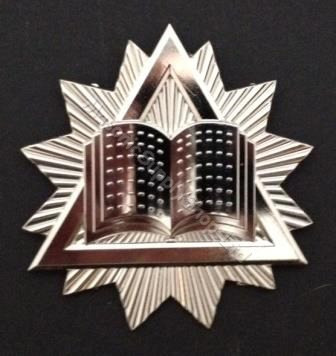
- Chaplain: often an open book.
- Senior and Junior Deacons: a dove, or in some workings a different emblem.
- Director of Ceremonies: crossed rods or wands.
- Stewards: often a cornucopia.
- Inner Guard: crossed swords, and Tyler: a sword.
- Organist, Almoner and others: as set by the jurisdiction.
Designs differ slightly between Canadian Grand Lodges. Your Book of Constitutions shows the official patterns.
The lodge set
Most lodges own a complete set of officers' jewels and collars, passed to each new officer at installation. Matched sets look best, so record the maker and finish so future replacements match. See our guide to the Past Master jewel for the personal jewel many Masters receive.
Caring for jewels
- Store each jewel in its own pouch in a dry cupboard.
- Wipe with a soft cloth after use; avoid harsh polish on plated finishes.
- Replace worn collar ribbon rather than the whole collar.
Installation night
Officers' jewels and collars change hands at the installation. Before the evening, lay out the full set in office order, check every jewel is on its collar, and fix any loose fittings. During the ceremony, each collar is placed on the new officer as he is invested, so a well-prepared set keeps the evening flowing.
Adding offices
Lodges occasionally add offices, such as Almoner, Mentor or Charity Steward, as their needs change. Check whether your Grand Lodge specifies a jewel for the new office, and order one that matches the existing set.
Replacing a lost jewel
Jewels occasionally go missing, especially when lodges move or share buildings. Before ordering a replacement, check with Brethren who may have taken a jewel home for cleaning, and check the regalia cupboard of any lodge you share with. When ordering, send a photo of the rest of the set so the replacement matches.
Jewels in concordant bodies
Royal Arch Chapters, Preceptories and Scottish Rite bodies have their own officers' jewels, following the same principle: each office has a symbol, worn on a collar during the year in office. A Mason active in several bodies may wear many different jewels over the years.
Where to buy Canadian regalia and officers' jewels
The Canadian Masonic Supply Shop carries lodge officer collar jewels and Past Master jewels.
FAQ
Do officers buy their own jewels?
Usually not. The lodge owns the set. Personal jewels, such as Past Master jewels, belong to the Brother.
Can a single jewel be replaced?
Yes, but match the finish and size of the rest of the set.
Are jewel designs the same in every province?
Broadly similar, with differences set by each Grand Lodge.
What does the Tyler's jewel represent?
The Tyler's jewel is a sword, reflecting his duty to guard the door of the lodge.
What is the Treasurer's jewel?
Crossed keys, representing his responsibility for the lodge's funds.
What is the Chaplain's jewel?
Often an open book, representing the Volume of the Sacred Law, though designs vary by jurisdiction.
What is the Secretary's jewel?
Crossed pens or quills, representing his role in keeping the lodge's records and correspondence.